Passivating stainless steel in food production

Passivation of stainless-steel surfaces for hygienically sensitive production environments, citric-acid-based and application-specific. 

The short path to the right solution

Food production

Targeted passivation of stainless steel after welding, rework or contact with foreign metals

In food production, stainless-steel surfaces must be resistant, easy to clean and suitable for the process. After welding, grinding, mechanical processing or contact with foreign metals, passivation can be useful to remove free iron from the surface and specifically support corrosion resistance.

CitriSurf® offers citric-acid-based solutions for various applications, from local treatment of individual surfaces and weld seams to passivation of tanks and pipelines.

Food production

When passivation is useful in food production

Stainless steel is established in production environments close to food because it enables robust and easy-to-clean surfaces. However, its corrosion resistance depends on the condition of the surface.

After welding, mechanical rework or contact with iron-containing particles, free iron can remain on the surface. This can impair corrosion resistance and worsen the surface condition. This is exactly where passivation comes in: it helps return the surface to a low-corrosion, stable condition. 

This is particularly relevant for weld seams, transitions, repair areas, tanks, pipelines and other areas where surface quality and cleanability play a central role. 

Food production

Passivating is not pickling

For correct application, it is important to clearly distinguish between pickling and passivation. Heat tint, scale or comparable welding residues must first be removed with a suitable pickling process if present. Passivation then follows and serves to remove free iron from the surface and support the formation of a protective passive layer.

In practice, this means that not every surface needs the same step. What matters is the condition of the component and the objective to be achieved.

Food production

Which CitriSurf solution fits which area of application?

01

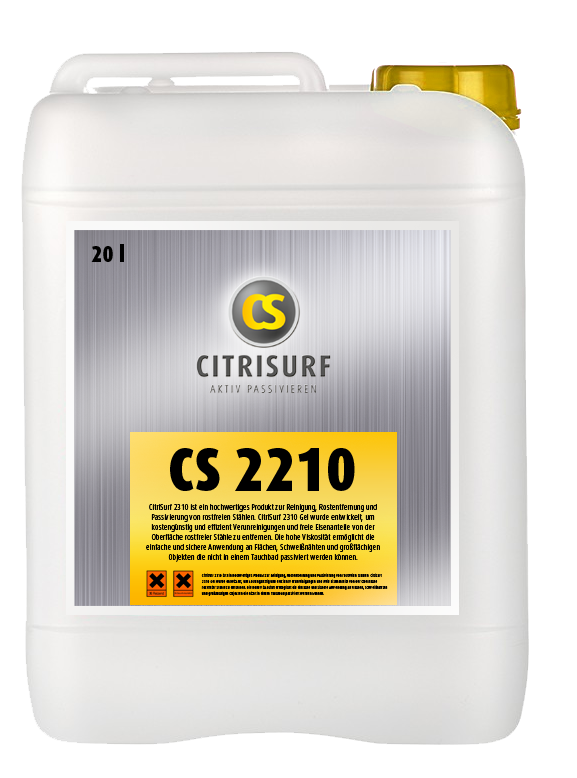
Surfaces, weld seams and larger stainless-steel surfaces: CitriSurf 2210

For accessible surfaces, weld seams and larger components that are not treated in an immersion bath, CitriSurf 2210 is the obvious solution. The gel-like consistency facilitates targeted application on local and semi-surface areas.
02

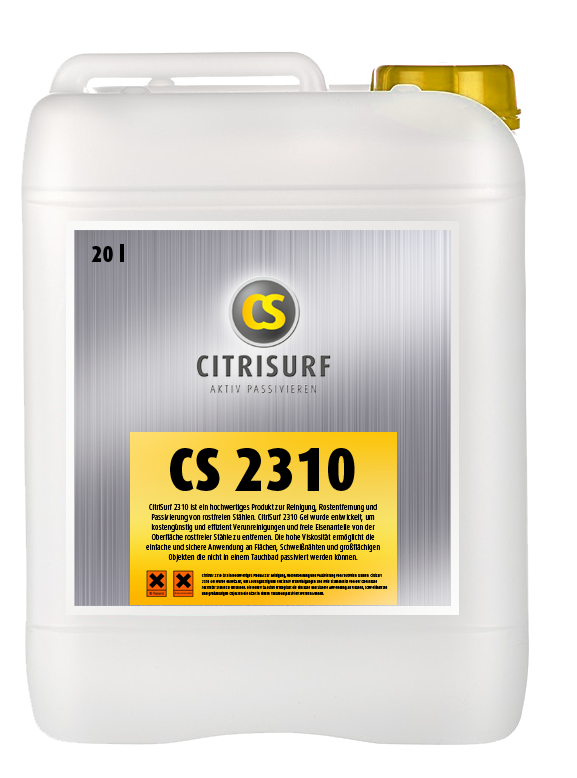
Local rust spots and spot rework: CitriSurf 2310 and CitriSurf 77plus

If rust is already visible, the products designed for this purpose are more likely to be suitable. CitriSurf 2310 is suitable for local applications on surfaces and weld seams, while CitriSurf 77plus is suitable for smaller areas and spot rework.

03

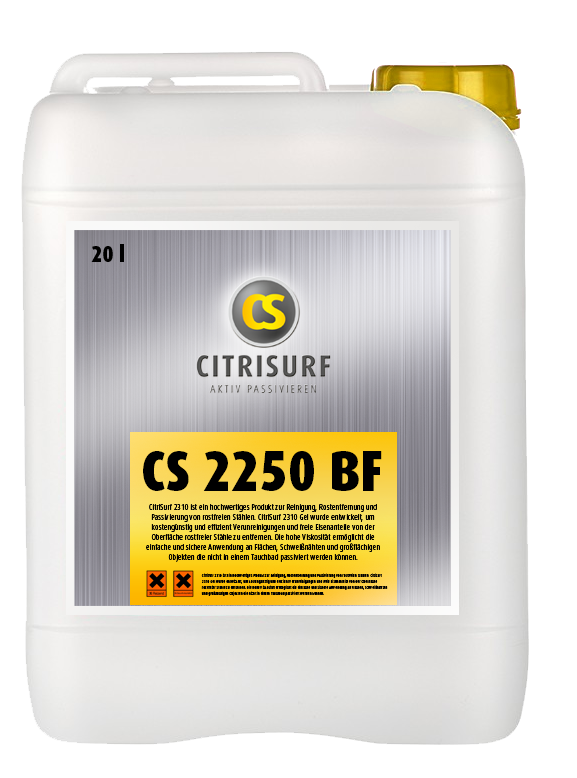
Immersion-bath applications and larger quantities: CitriSurf 2250 BF

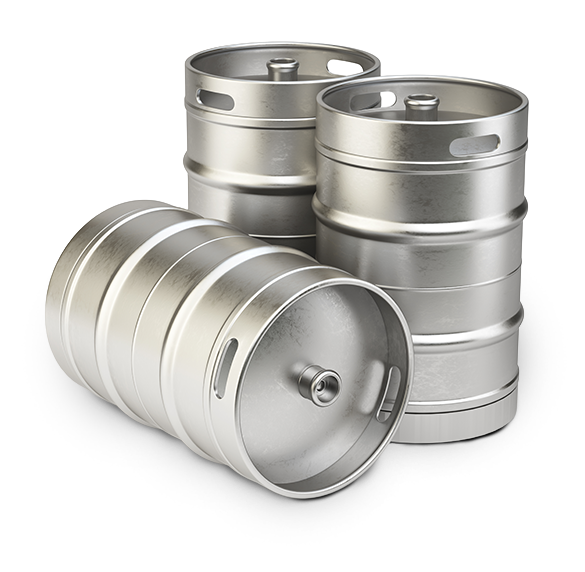
For treating larger quantities of smaller components, CitriSurf 2250 BF is designed for immersion-bath applications.

04

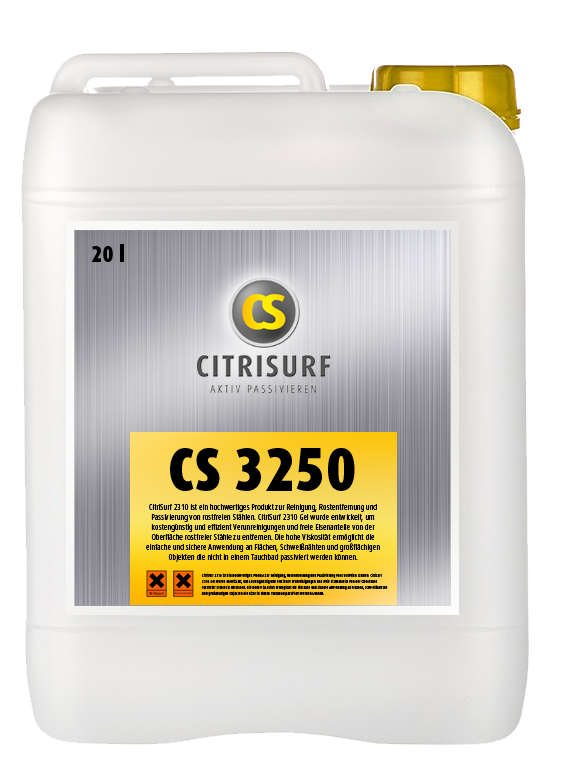
Tanks, pipelines and plant-related processes: CitriSurf 3050 and 3250

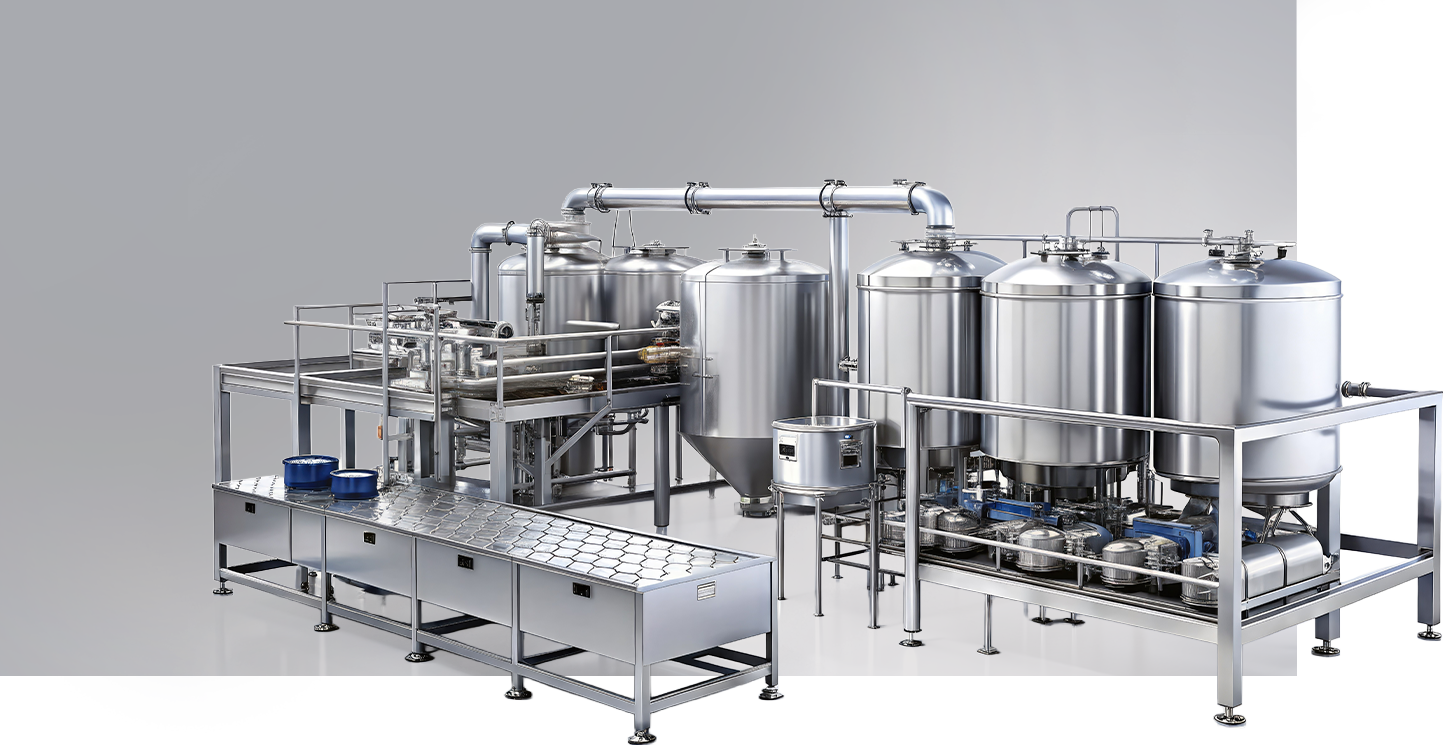
For tanks, pipelines and comparable plant components, CitriSurf 3050 and 3250 provide foam-controlled solutions. These applications primarily require uniform wetting and an approach suited to the plant.

Food production

What else must be considered in food-related areas

In food production, simply referring to a passivation procedure is not enough. ASTM A967/A967M and AMS2700 cover the technical execution and verification of passivation. Whether a treated stainless-steel surface can be used in the specific process also depends on food-contact law, hygiene requirements, GMP, rinsing, possible residues and operational release. ASTM itself does not state whether a specific procedure or test criterion is suitable for a particular application class, such as product-contact areas in food production.

For product-contact surfaces, the entire process matters, not only passivation itself: material, surface condition, pre-cleaning, rinsing quality, residues, test concept and operating conditions must be assessed together. For metals and alloys, there is no specific individual measure in the EU under Article 5 of the Framework Regulation; in practice, technical guidelines such as the EDQM guideline on metals and alloys as well as application-specific documentation and assessment are therefore used. 

Important for product-contact applications:
An ASTM A967/AMS2700 reference describes passivation technically, but does not replace testing for the specific use in the food process. Citric-acid-based passivation is also not automatically approved for all food applications; the decisive factors are material, surface condition, rinsing, residues, test concept and operational release.

Food production

Occupational safety and safe application

Citric-acid-based processes are still chemical applications. Product-specific instructions, safety data sheets and protective measures should therefore always be observed. Depending on product and application, these include personal protective equipment, suitable process control and a safe rinsing and disposal routine.

Especially in existing systems, it is also necessary to check which requirements result from material, accessibility, plant environment and operating procedure. 

FAQ

Frequently asked questions

Especially after welding, mechanical processing, contact with foreign metals or spot corrosion. Whenever free iron on the surface can impair corrosion resistance, passivation should be considered.

No. Pickling removes heat tint, scale and comparable residues. Passivation follows and supports the formation of a corrosion-resistant surface.

For weld seams and adjacent surfaces, CitriSurf ® 2210 is an obvious solution. If rust also has to be removed, CitriSurf ® 2310 or CitriSurf ® 77plus are the more suitable choice.

CitriSurf ® 3050 and 3250 are intended for these applications. Which solution is suitable in each individual case depends on the system, material and process control.

No. ASTM A967/A967M and AMS2700 concern technical passivation and its verification. For product-contact surfaces in food production, food-contact law, hygiene requirements, GMP and operational release are also relevant. ASTM A967/A967M itself states that the standard does not recommend the suitability of a specific procedure or test criterion for a specific application.

No. Whether a treated surface can be used in the specific process depends on material, surface condition, pre-cleaning, rinsing, residues, test concept and operating conditions. For metals and alloys, there is no specific individual measure in the EU; in practice, technical guidelines such as the EDQM guideline as well as application-specific documentation and assessment are therefore used. The BfR also points out that there is no general authorization of food-contact materials and no official list of "approved" materials or articles.

Here, not only the procedure and product selection are relevant, but also pre-cleaning, rinsing, possible residues, occupational safety and operational testing and release before reuse.

Whether weld seam, surface treatment, immersion bath or tank and pipeline passivation: the decisive factor is which process fits the surface condition, component and process. 

Consulting & Contact

Are you looking to passivate stainless steel components for food production and need a reliable preliminary selection? If so, you should first determine which standard applies, the geometry of the components, the intended process, and how verification will be conducted. Based on this information, a suitable CitriSurf® process can be technically identified.

We can assist you in determining whether a product is intended for local application or bath processing, evaluating weld zones and complex assemblies, selecting among different CitriSurf® formulations, conducting a preliminary technical assessment with regard to relevant standards, and requesting data sheets and product samples.

How can CitriSurf® be ordered?

Exclusively from MKK GmbH, Oldenburg
Order by email: order@citrisurf.de

Please note:
- Provide your VAT ID
- Billing address and delivery address required
- Orders before 12:00 noon: usually shipped on the next working day
- Delivery date = shipping date (transit times depend on the logistics provider)