CitriSurf®

Passivating stainless steel with citric acid

CitriSurf® is a citric-acid-based cleaning and passivation solution for industrial applications. It safely and environmentally responsibly removes free iron from the surface of stainless steels, creating important conditions for corrosion-resistant, reproducible stainless-steel surfaces.

The short path to the right solution

About CitriSurf®

Briefly explained

Citric acid reliably cleans stainless-steel surfaces. It removes free iron (Fe contamination) from the surface and thereby creates important conditions for stable, corrosion-resistant surfaces. Depending on the component, material and process, the use of citric acid can be an alternative to more aggressive chemicals.

What is "passivation"?

In chemistry, "passivation" means making something chemically passive or inactive.

Why can corrosion occur despite stainless steel?

In principle, stainless steel is corrosion-resistant, but this protection is not automatically guaranteed under all conditions. Whether a surface remains permanently "rust-free" always depends on the interaction between material, environment and processing.

An important factor is choosing the right material for the respective application. Not every stainless-steel alloy is suitable for every environment. Chloride-containing media, such as salt water, or maritime air are particularly demanding. Under unfavorable conditions, even corrosion-resistant steels can be attacked. The condition of the surface is equally important. Processing steps such as grinding, blasting, polishing or welding change the surface and can affect the protective passive layer.

Depending on the process, execution and post-treatment, corrosion protection can be weakened, especially if residues, heat tint or structural changes remain on the surface. Another often underestimated factor is contamination. Even the smallest iron particles, for example from contact with unalloyed steels, tools or abrasives, can act as a "corrosion seed" and trigger local rust formation.

This is exactly where CitriSurf® comes in: it removes free iron from the surface and supports the formation or preservation of a corrosion-resistant surface.

Standards & requirements (citric acid as an alternative)

For standards and technical requirements, citric acid has long been established as a practical alternative. Relevant references include AMS 2700 and ASTM A967. Both standards describe passivation with citric acid as an alternative to conventional passivation with nitric acid. Which CitriSurf solution is best suited in a specific case depends on several factors, particularly the material used, the geometry or component, and the planned process design.

For passivation to work reliably and deliver reproducible results, several requirements must be met. The most important foundation is thorough cleaning: only a clean surface enables a stable passive film, regardless of which acid system is used.

Special attention should also be paid to heat tint and weld areas. Depending on the quality requirement, heat tint should be removed in a targeted manner, for example by grinding, polishing or electrolytic processes.

A practical note in conclusion: the use of so-called "stainless-steel brushes" is often not recommended, because they can introduce additional iron, which can later become a starting point for corrosion.

Selection guide

Products & processes

If you would like a consultation, the solution finder helps prepare the selection of the right process.

Typical processes (examples):
- Immersion-bath passivation
(e.g. CitriSurf 2250 / 3050 - design according to specification)
- Tank and pipeline passivation (e.g. 3050 / 3250)
- Gel applications for surfaces (e.g. 2210)
- Rust removal/rework (e.g. 2310 / 77plus)
- Derouging/descaling (e.g. 8050)

To the solution finder

In practice, the advantages are particularly convincing wherever efficiency and a smooth process matter. Application is straightforward and can be integrated into existing workflows with little effort. At the same time, the passivation solution is characterized by a long service life, which reduces consumption and makes costs predictable.

The process also offers clear advantages in terms of occupational safety: users are not exposed to toxic fumes, and no corrosive, unpleasant working environment is created. In addition, the time required for application is short, keeping processing and throughput times low. Another practical advantage lies in disposal: depending on bath condition, degree of contamination and local regulations, disposal as normal waste may be possible. This is rounded off by a coordinated product line that sensibly covers the relevant process steps, from cleaning and passivation through to rust removal.

Immersion-bath passivation

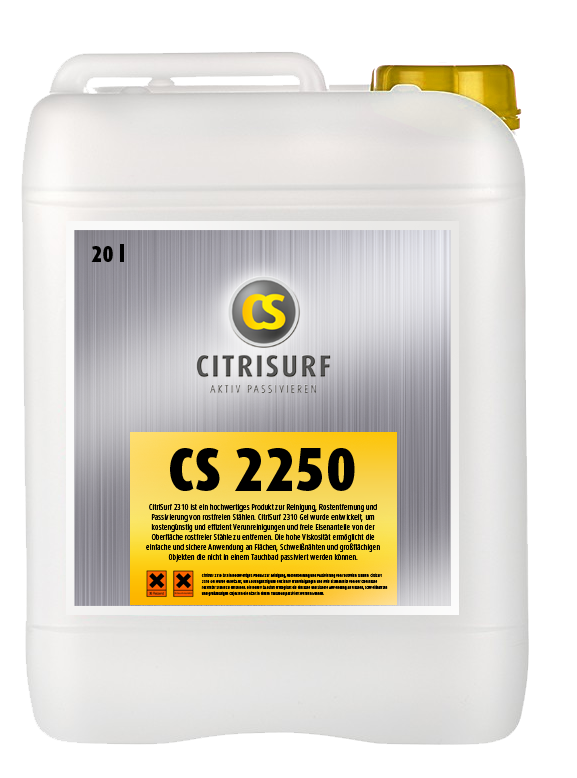
For large quantities of smaller components, the use of CitriSurf® 2250 is recommended. The concentrate is particularly suitable for medical stainless steels with carbon content and low chromium content and is normally used at a dilution of 1:2 - 1:5.

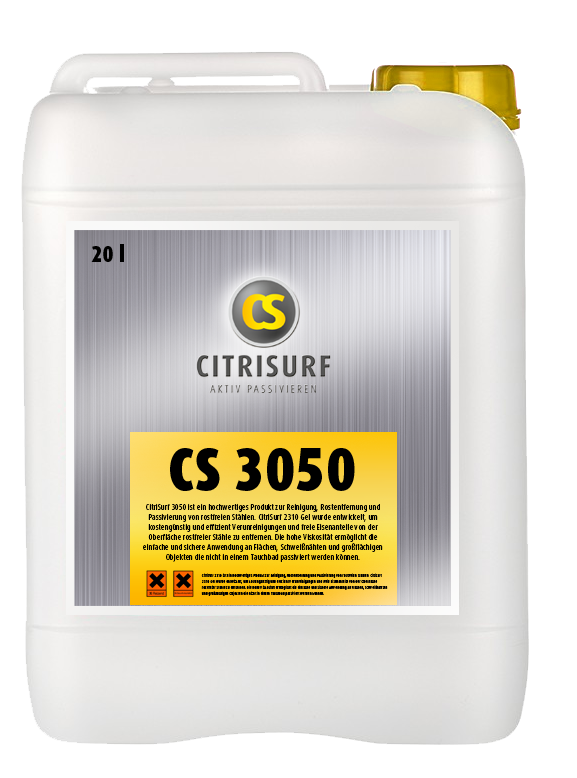
For V2A and V4A steels and all stainless steels with higher chromium content, CitriSurf® 3050 can also be used at a dilution of 1:2 to 1:10.

Biocide-free immersion-bath passivation for implants and surgical instruments

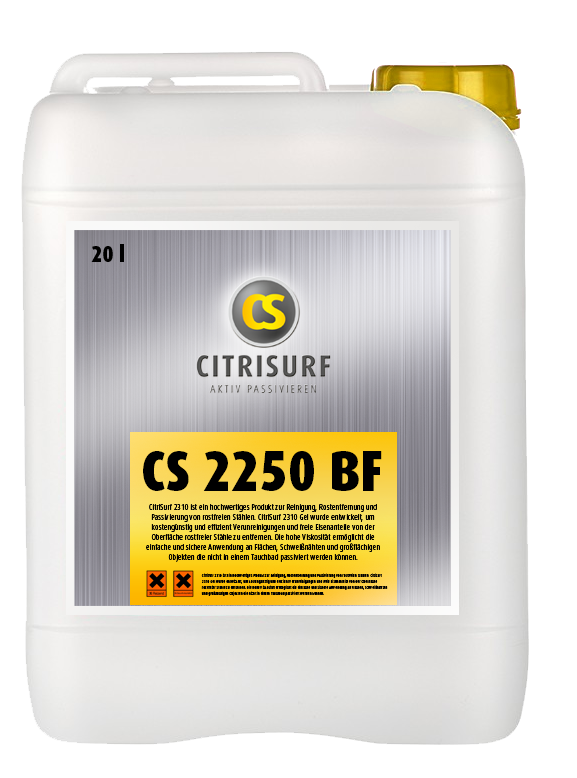
For products that must pass biocompatibility tests such as a cytotoxicity test according to ISO 10993-5, it may be necessary to avoid all biocides in the cleaning and passivation process. A special CitriSurf® 2250 Biocide-free is available for this purpose; it contains no fungicides or biocides. Very thorough pre-cleaning is necessary to prevent fungi and bacteria from being carried into the bath.

Tank and pipeline passivation

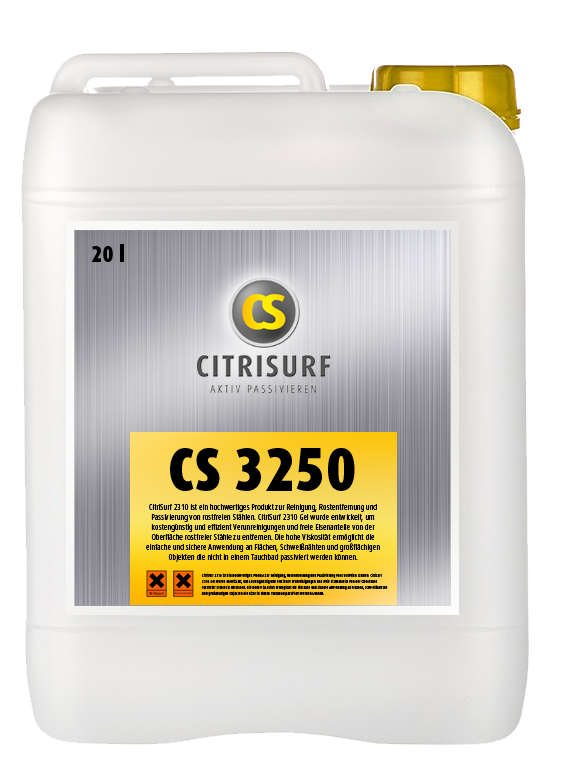
Depending on the steel grade and application method, CitriSurf® 3050 or 3250 solutions are used here. The special property of these concentrates is their foam-inhibiting effect, which also enables pump systems and spray-ball applications.

Highly alkaline pre-cleaning

For steel grades with a higher sulphur or carbon content, pre-cleaning with a cleaner with a pH value of >11 has proven very effective. The highly alkaline cleaner KleerKleen™ is matched to the CitriSurf® process.

Surface passivation

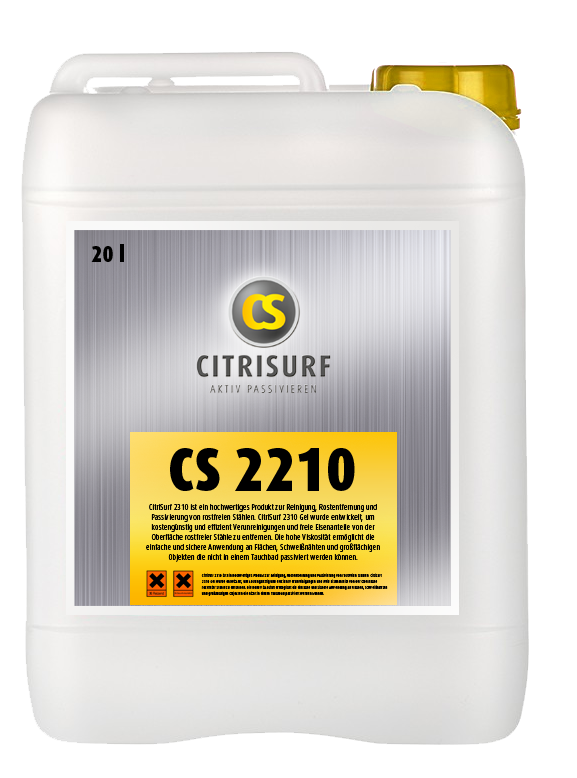
CitriSurf® 2210 is used for passivating surfaces and large machine parts. The gel product can be sprayed on or brushed on.

Rust removal & passivation

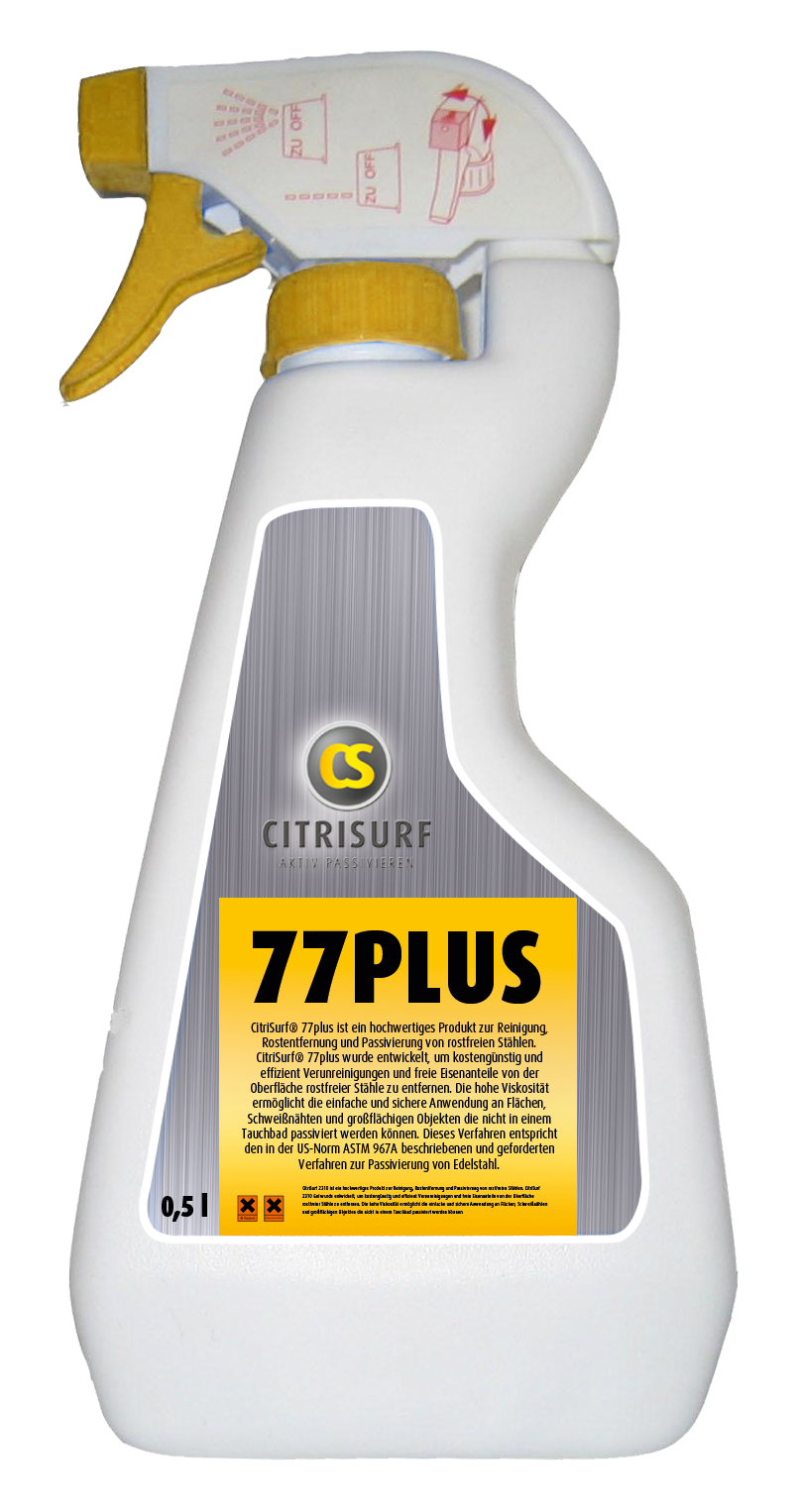
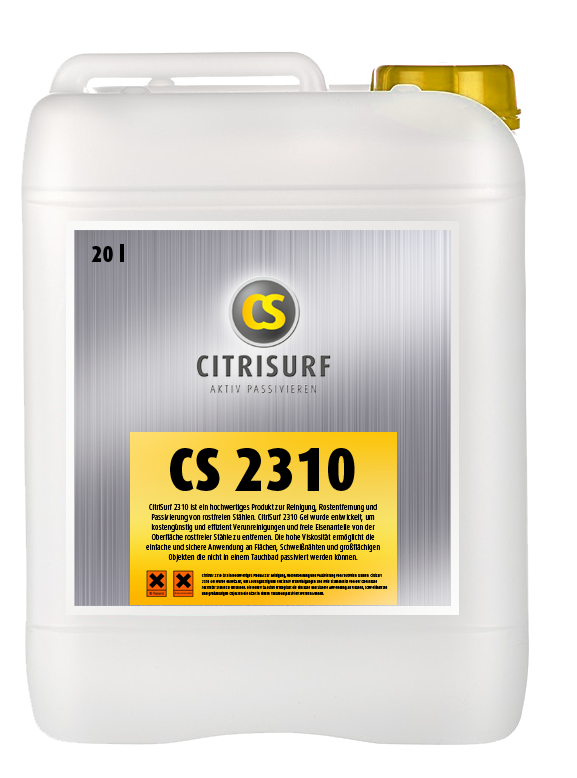
If rust has already formed on the surface, it can be dissolved with CitriSurf® 2310 and 77plus. The gel-like CitriSurf® 2310 is sprayed on or brushed onto the rust spot. 77plus is a small 500 ml spray bottle used for minor rework. Applying it twice achieves both rust removal and passivation.

Derouging with CITRISURF®

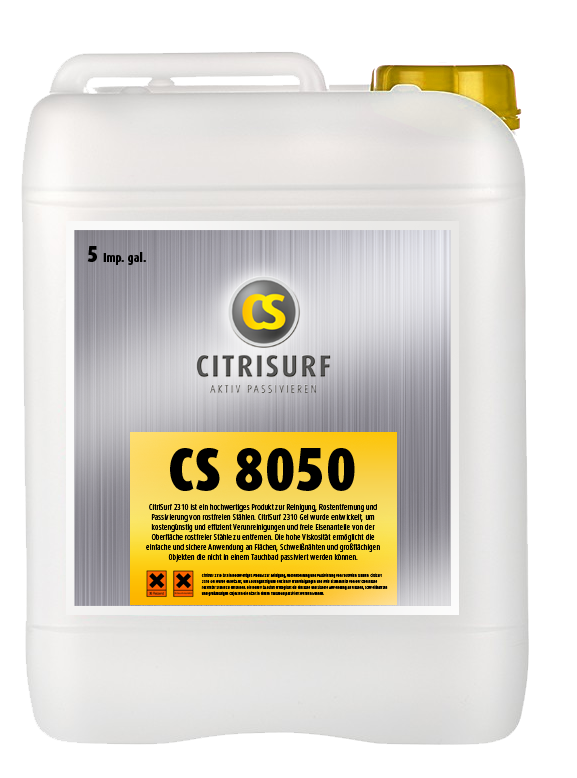
CitriSurf® 8050 is a high-quality combination of chemicals for derouging and descaling stainless-steel products. CitriSurf® 8050 was specially developed to remove all iron oxides and free iron from stainless-steel surfaces cost-effectively and efficiently, thereby achieving the highest possible chromium oxide values.

FAQ

Frequently asked questions

Passivation describes processes that support the corrosion-resistant passive layer of stainless steel, especially after machining, contamination or welding.

Free iron can act as a corrosion seed and trigger rust, even if the base material is stainless.

Yes. Citric acid is described as an alternative in relevant standards. Suitability and parameters depend on material, surface condition and process design.

If high corrosion resistance is required: yes, thoroughly. Heat tint/scale can promote corrosion.

Consulting & Contact

For many years, we have supported companies with stainless steel passivation, from root cause analysis through to implementation, including on site by arrangement.

How can CitriSurf® be ordered?

Exclusively from MKK GmbH, Oldenburg
Order by email: order@citrisurf.de

Please note:
- Provide your VAT ID
- Billing address and delivery address required
- Orders before 12:00 noon: usually shipped on the next working day
- Delivery date = shipping date (transit times depend on the logistics provider)